

Choose Interior Home Painting Service, West Michigan (2025)
Choosing a Painter for Your Home’s Interior (West Michigan Homeowner Guide)
You can feel it the moment you walk into a freshly painted room. The light looks cleaner, the corners look sharper, and the whole space feels like it finally matches your life today. But getting there should not feel chaotic. A great interior home painting service is calm and predictable: clear pricing, careful prep, respect for your home, and safe work habits from day one.
If you’re a West Michigan homeowner, you also want a crew that shows up when they say they will, protects your floors like they’re their own, and leaves your space livable at the end of each workday. Done right, interior painting is not just cosmetic, it helps protect drywall, trim, and high-touch surfaces, and it supports your home’s value.
If you’re ready to refresh your space without the stress, start by requesting a free estimate here: https://www.gordon-painting.com/schedule-free-estimate
Know what you need before you call painters
The easiest way to avoid surprise costs is to get clear on your scope before anyone prices the job. When you can describe what you want in plain terms, you’ll get quotes that match up better, and you’ll feel more confident comparing them.
Start with a quick snapshot of your project. Write it down in your phone notes so you can repeat it to each contractor.
Here’s a simple “scope starter” you can copy:
- Rooms: (example) living room, hallway, stairwell, primary bedroom
- Surfaces: walls only, or walls plus ceilings and trim
- Color: same color refresh, or new color
- Finish: standard clean repaint, or near-perfect walls
- Timing: (example) want it done before guests arrive, or before listing
- Concerns: kids, pets, allergies, work-from-home days, older plaster, smoke stains
That one-minute list helps you avoid the classic problem: one painter bids “walls only with light patching,” another bids “walls plus trim with stain-blocking primer,” and the numbers look wildly different.
Pick your goals, rooms, and finish level
Interior painting can be as simple as a clean color update, or as detailed as a full reset that makes every wall look brand new. Your goal changes the prep, the materials, and the time.
Walls vs trim vs ceilings:
Painting walls is often the baseline. Adding trim, doors, and ceilings increases labor because there’s more cutting-in, more detail work, and more masking. Ceilings also show roller lines if the painter rushes.
One room vs whole home:
A single room is easier to schedule, but it can cost more per room because setup and cleanup still take time. Whole-home projects can be more efficient, but you’ll need a plan for furniture, access, and quiet hours.
Color change vs refresh:
A refresh in the same color usually needs less work. A big color jump (beige to deep blue, or white to dark green) can mean extra coats, more primer, and more touch-ups.
What “perfect walls” means:
Most homes have minor dings, nail holes, and little cracks. If you want “looks great from normal distance,” that’s one level. If you want “spotlight-ready walls,” that’s another, and it may include more sanding, skim areas, and careful feathering so patches disappear.
Quick sheen tips (plain language):
- Flat or matte: Hides wall bumps best, but marks easier. Great for low-traffic rooms and many ceilings.
- Eggshell: A common choice for living spaces, it wipes better than flat without looking shiny.
- Satin: Tougher and easier to clean, good for hallways, kids’ rooms, and busy areas. It can highlight wall flaws more than eggshell.
If you’re not sure, tell your painter how the room gets used. A good pro will guide you, not push you.
Decide what you want the painter to handle
A big part of your final price is not the paint. It’s everything that happens before the first coat and after the last one. This is where you decide what “stress-free” looks like for you.
Before you request bids, choose what you want included:
- Moving and protecting furniture (you move small items, they move heavy pieces, or they do it all)
- Floor protection (drop cloths, paper, plastic runners, and taped edges)
- Wall repairs (nail holes only, or cracks, dents, and popped drywall seams)
- Sanding level (spot sand, full scuff sand, or “make it smooth under bright light”)
- Priming needs (stain blocking for smoke, water marks, knots, or marker)
- Daily cleanup (vacuum, trash removal, tools stored safely)
- Final cleanup (reinstall plates, sweep, wipe baseboards, haul away debris)
Write down your must-haves before the walkthrough. Two examples that prevent headaches later are daily cleanup and careful masking. When you say those out loud at the start, you set expectations in a way that protects you.
How to spot a trustworthy interior painter in West Michigan
You’re not just hiring someone to put color on walls. You’re hiring someone to work inside your personal space, near your kids, your pets, your floors, and the stuff you can’t replace. Trust comes from proof and from process.
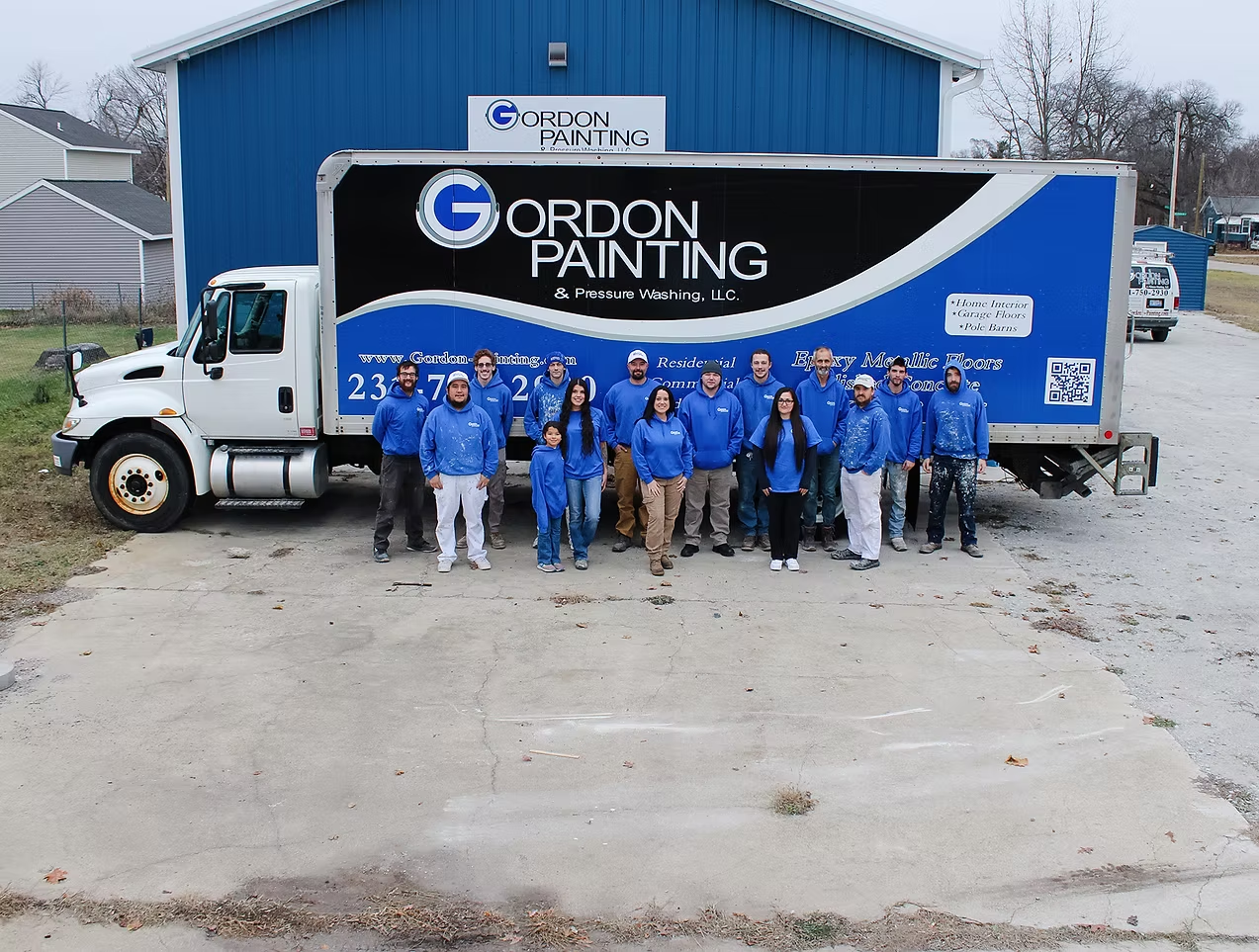
In West Michigan, the best interior crews tend to share a few traits: consistent communication, strong prep habits, respect for your home, and a clear safety mindset. A company with 20-plus years in the trades usually has systems for scheduling, protection, and clean results that newer outfits are still learning the hard way.
Look for proven experience, recent reviews, and local work you can verify
Reviews help, but only if you read them with a contractor’s reality in mind.
When you scan feedback, look for:
- Recent comments from the last 6 to 12 months, not only older praise
- Patterns, like “clean lines,” “showed up on time,” “kept the house tidy,” “good communication”
- How problems were handled, because every company eventually hits a surprise (a hidden stain, old drywall tape, a color that needs extra coats)
Also ask for local references or photos of projects that match your home. Not all interior work is the same. You’ll feel better if you see proof they can handle what you have, such as:
- Trim repaints with crisp edges
- Cabinets or built-ins (a different skill set than walls)
- Older plaster walls or textured surfaces
- Stairwells and high ceilings that require solid ladder work
Long-time pros often price more accurately because they’ve seen the weird stuff. That usually means fewer surprises for you, and a smoother schedule.
If your “interior update” includes your kitchen, you’ll also want to confirm whether the painter offers cabinet work, since it’s more involved than a standard wall repaint. You can see what a cabinet-focused service looks like here: https://www.gordon-painting.com/interior-painting/cabinet-refinishing-and-repainting
Ask about safety, training, and how your home stays protected
Safety does not need to feel scary or dramatic. It should feel practical, like watching someone cover your floors before they open a paint can. A safe job is part of quality, not an add-on.
During your estimate, ask how they handle:
- Clean pathways: keeping cords, tools, and materials out of walkways
- Ladder use: stable setup, no balancing acts, and the right ladder for the ceiling height
- Dust control: sanding practices, vacuum attachments, and keeping doors closed when needed
- Ventilation: airflow plans, window use, and low-odor paint options if you’re sensitive
- Kids and pets: where paint, brushes, and tools live after hours, and how wet areas get blocked off
- Daily site cleanup: so you’re not stepping over plastic and debris for days
For older homes, add one more question: what’s the plan for sanding and dust if lead paint is suspected? You do not need to diagnose your own walls. You just need a contractor who takes the question seriously and explains the next step clearly.
If you want a real-world snapshot of a process built around protection and tidy work habits, look for a contractor who explains setup, prep, paint, clean, and inspection as separate steps, not as one vague promise.
Confirm insurance, written agreements, and who will be in your home
Interior painting is personal. The agreement should be clear enough that you can read it once and know what you’re getting.
Before you accept a bid, confirm these basics:
- Liability insurance and worker coverage (ask for proof, not just a verbal yes)
- Who does the work: employees, subcontractors, or a mix
- Who supervises: your point of contact if you have questions mid-project
- Start and finish dates: and what happens if weather or supply delays hit
- Change orders: how extras get priced and approved before the work begins
Also confirm included and excluded surfaces. This is where small misunderstandings start:
- closets and inside closet doors
- inside cabinets (usually separate from standard wall painting)
- behind appliances
- inside stair spindles or detailed trim profiles
- ceiling repairs versus repaint only
When everything is in writing, you’re not relying on memory. You’re protecting your time, your budget, and your home.
Compare estimates the smart way so you don’t overpay or get surprises
Once you have two to four estimates, the goal is not to chase the lowest number. The goal is to understand what each contractor is actually planning to do inside your home.
In West Michigan in late 2025, interior painting often falls in these broad ranges:
- $2 to $6 per square foot for many standard interior repaints
- $400 to $2,500 per room, depending on room size, trim, ceilings, and repairs
- $4,500 to $9,000 for many whole-home repaints, with layout and prep driving the spread
Those ranges are wide for a reason. Prep, repairs, and paint quality change the labor time fast. A crew that spends extra hours patching, sanding, priming stains, and protecting your floors can cost more up front, but you’re paying for a finish that holds up and looks even in real light.
Get multiple free estimates so you can spot outliers, both high and low. If you want to start scheduling walkthroughs, use this page: https://www.gordon-painting.com/schedule-free-estimate
What a detailed interior painting estimate should include
You should be able to compare bids like you compare apples at the store, same item, same size, same grade. If the estimate is too vague, you can’t do that.
A solid interior estimate usually spells out:
- Prep steps (masking, covering floors, protecting furniture)
- Patching scope (light nail holes, or larger repairs)
- Priming plan (where primer is used and why)
- Number of coats (and what “as needed” really means)
- Paint quality level (brand and line, or a clear “premium interior wall paint” description)
- Sheen by area (walls, trim, ceilings)
- Cleanup and disposal (daily and final)
- Warranty or satisfaction promise (written, not verbal)
- Payment schedule (deposit, progress payments if needed, final payment)
- Total price with clear inclusions and exclusions
Be cautious with an estimate that only says “paint and labor” as one line item. That’s like ordering a “kitchen remodel” with no list of cabinets, counters, or flooring. You need details to prevent surprise add-ons.
Red flags that often lead to bad results
Most paint failures start the same way, rushed prep and unclear expectations. If you notice these signs, slow down and ask more questions, or keep shopping.
Common red flags include:
- A phone-only quote without seeing your walls, trim, and lighting
- Prep described with vague words like “standard” with no specifics
- Pressure to pay a large cash deposit up front
- No proof of insurance
- No timeline, or a timeline that changes every time you ask
- Refusal to put the scope in writing
Very low bids often cut corners where you can’t see it right away. The paint may look fine for a few weeks, then you notice peeling near cracks, flashing where patches show through, or wavy cut lines along trim. Good prep is quiet work, but it shows up every time sunlight hits the wall.
Conclusion
Choosing a painter for your interior comes down to three smart moves. First, define your scope so every quote covers the same work. Second, verify trust the right way, with proven experience, clear communication, and safety habits that protect your home. Third, compare detailed estimates so you’re paying for prep, clean lines, and a finish that lasts, not just a low number.
When you hire an experienced team with 20-plus years of hands-on work, you’re more likely to get smooth walls, crisp edges, and a safer job from start to finish. You also get the peace of mind that comes from a crew that has systems, not guesses.
If you want a clean, stress-free interior update, take the next step now and request your free estimate: https://www.gordon-painting.com/schedule-free-estimate. Schedule a walk-through so your quote fits your home, your goals, and your timeline.

.svg)