

Your garage floor takes a beating. Road salt, oil drips, tire marks, and years of wear leave most concrete looking rough. But with a professional epoxy coating, that same floor can become one of the best-looking spaces in your home. Here are three recent transformations from Muskegon-area homes.
Transformation 1: The Norton Shores Ranch
The Challenge: A 20-year-old two-car garage with significant oil staining, minor cracking, and concrete that had never been sealed. The homeowners wanted a durable surface that could handle Michigan winters.
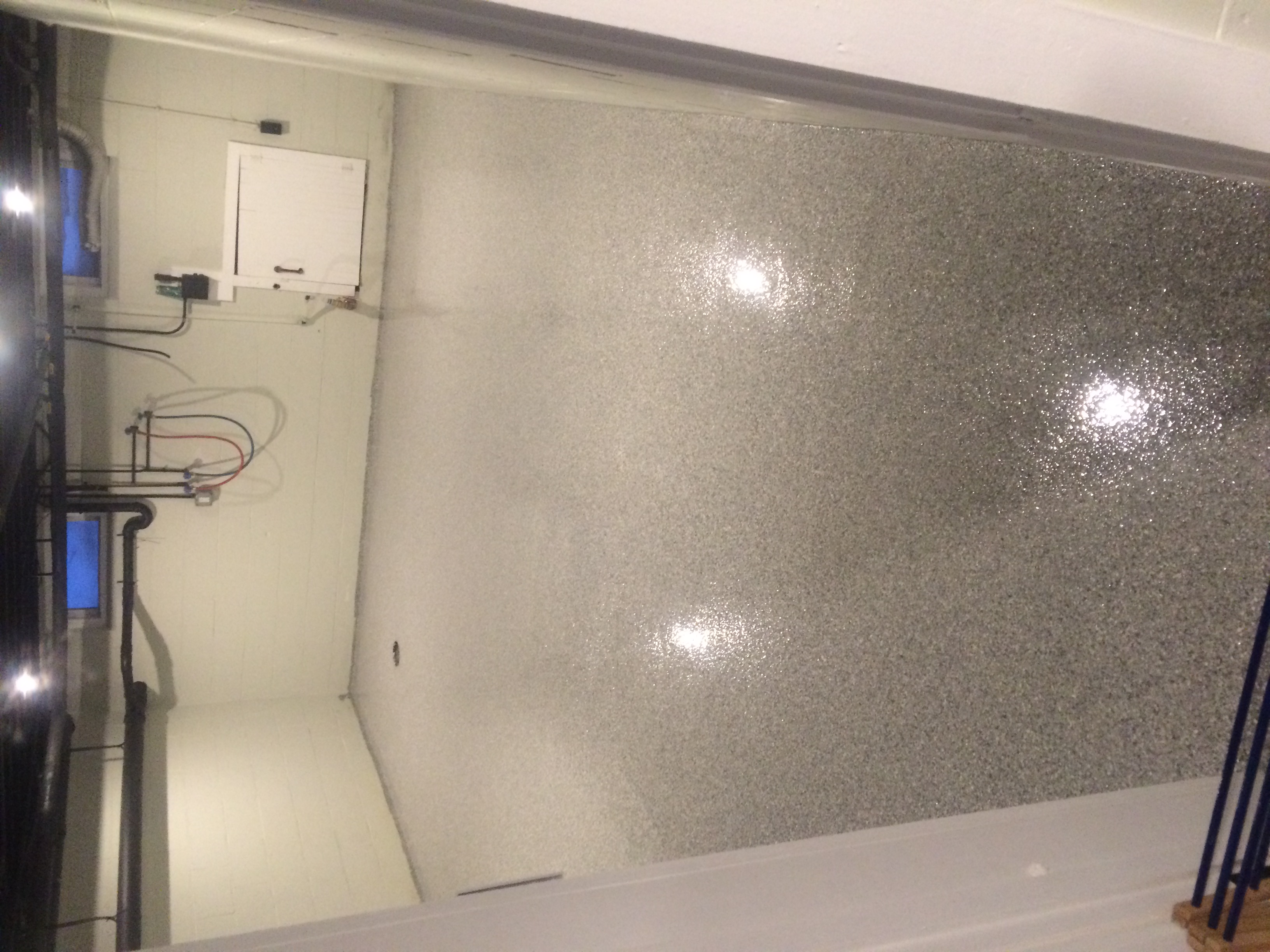
The Solution: We diamond-ground the entire surface to remove contaminated concrete and create proper adhesion. Cracks were filled with flexible polyurea filler. We applied a two-coat polyaspartic system in charcoal gray with black and white flake broadcast.
The Result: A showroom-quality floor that resists hot tire pickup, salt, and chemical spills. The homeowners now use half the garage as a workshop and couldn't be happier with how easy it is to clean.
Transformation 2: The Muskegon Colonial
The Challenge: A three-car garage that had been painted with DIY epoxy several years prior. The coating was peeling badly, especially near the doors where moisture and salt exposure were highest.
The Solution: Complete removal of the failed coating through diamond grinding, followed by moisture testing to ensure the concrete was ready for new material. We installed a full-broadcast flake system in a custom tan and brown blend to complement the home's exterior.
The Result: Unlike the previous DIY job, this professional installation comes with proper prep work and commercial-grade materials rated for hot tires and UV exposure. Three months in through a harsh winter, the floor looks exactly like the day we finished.
Transformation 3: The Whitehall Lakehouse
The Challenge: A newer home with a four-car garage that the owners wanted to use partially as a gym and recreational space. The bare concrete was functional but cold and uninviting.
The Solution: We applied a high-build polyaspartic coating in light gray with a partial flake broadcast, creating distinct zones: full flake coverage in the parking areas for maximum durability and traction, lighter application in the gym area for easier cleaning and a cleaner look.
The Result: The garage now functions as a true multi-use space. The coating provides cushion and warmth underfoot compared to bare concrete, and the zoned approach gives each area the right balance of function and appearance.
Why Winter Works for Garage Floors
Like cabinet refinishing, epoxy and polyaspartic floor coatings can be installed year-round because we control the environment. We use heaters to maintain proper temperature during installation and curing. The coatings we use cure quickly—most projects are walkable in 24 hours and ready for vehicles in 48 to 72 hours, even in January.
Getting your floor coated in winter means it's ready to protect against salt and slush for the rest of the season—and you'll have a pristine surface waiting when spring arrives.
What to Expect
Professional garage floor coating typically takes one to two days depending on garage size and condition. We handle all prep work including grinding, crack repair, and cleaning. The biggest variable is concrete condition—heavily damaged or contaminated floors require more preparation.
Most two-car garage floor projects fall in the $2,500 to $4,500 range, with larger garages and specialty finishes at higher price points. Contact us for a free estimate—we'll assess your floor and give you options that fit your budget and goals.

.svg)