

Cabinet Refinishing vs Replacement Cost, Michigan 2025
You don’t need a full kitchen tear-out to get a kitchen you’re proud to walk into. If your cabinets feel tired but the layout still works, cabinet refinishing can refresh the whole room for far less money than replacement, and with a lot less disruption.
Still, replacement has its place. Some kitchens need new cabinet boxes, better storage, or a new footprint. If you’re in West Michigan (Muskegon, Norton Shores, Grand Haven, Spring Lake, and nearby), your decision also runs through local realities like older homes, winter scheduling, and humidity swings that can punish rushed work.
This guide gives you a clear cost comparison, what drives each price, the hidden add-ons that catch homeowners off guard, and a quick checklist to choose based on your goals (look, durability, timeline, and resale). With pros who bring over 20 years of experience, you can avoid the expensive “we’ll fix it later” mistakes and get results that hold up.
Cabinet refinishing vs. replacement, what is the real difference?
These two options can both make your kitchen look new, but they get there in very different ways.
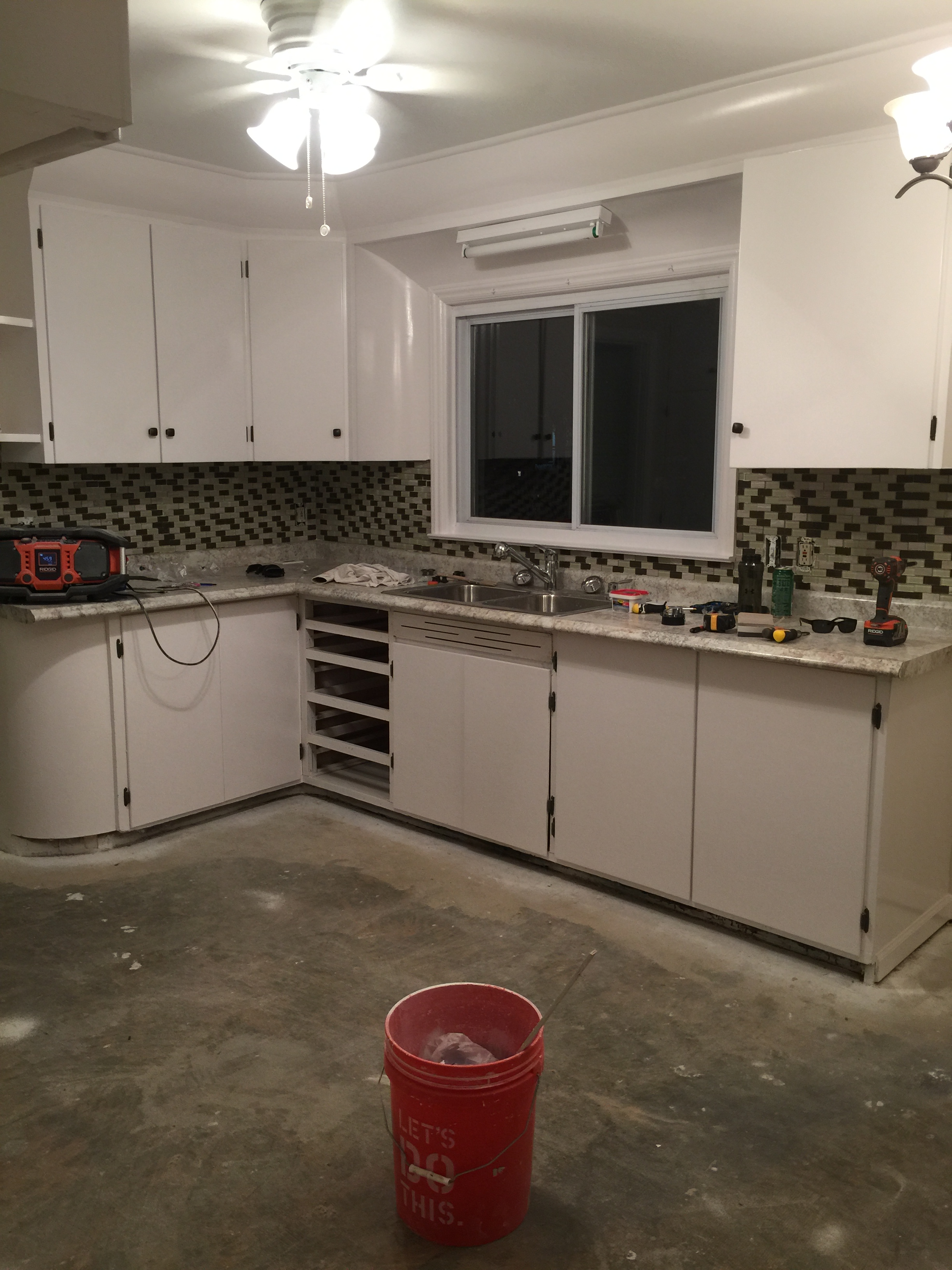
Cabinet refinishing means you keep your existing cabinet boxes and doors, then repair, prep, and apply a new finish (often paint, sometimes stain). Many homeowners also swap hardware, add soft-close hinges, or upgrade pulls to complete the look. You’re improving what you already own, which protects your investment and cuts out a big chunk of material cost.
Cabinet replacement means your old cabinets come out and new cabinets go in. That includes new cabinet boxes, new doors, new installation, and often a chain of follow-on work (trim, drywall, countertops, plumbing, electrical). You gain design freedom, but you pay for it.
You’ll also hear a few related terms online:
- Cabinet repainting: Often used as a catch-all term. If it’s done right, repainting is part of a true refinishing process (repair, prep, prime, and topcoats), not a quick coat.
- Cabinet refacing: You keep the boxes, but replace doors and drawer fronts, then apply a veneer to the visible box surfaces. It can cost more than refinishing, less than full replacement.
- Stock cabinets: Pre-made sizes and styles, usually the lowest cost for replacement.
- Semi-custom cabinets: More sizing and style options, mid-range pricing.
- Custom cabinets: Built to your kitchen, highest cost, most flexibility.
The practical takeaway is simple: refinishing changes the look and improves surface protection, replacement changes the structure and the options.
What cabinet refinishing includes (prep, repairs, and a new finish)
A lasting cabinet finish is more like building a good driveway than hanging a new picture. The surface under it matters. When refinishing is done professionally, you’re paying for time, prep, and a coating system that can handle daily life.
A typical cabinet refinishing workflow includes:
1) Cleaning and degreasing
Kitchen cabinets collect oils you can’t always see. Proper degreasing helps primer and paint bond instead of peeling later.
2) Sanding or deglossing
This creates a surface the coatings can grip. Some jobs need more sanding than others, especially older finishes.
3) Minor repairs
Small dents, chipped edges, and worn corners get filled and smoothed. This is where “pretty good” becomes “clean and crisp.”
4) Priming
Primer is the bridge between the old finish and the new topcoat. Skipping it is a common reason cabinets fail early.
5) Applying the finish
Pros often spray doors and drawer fronts for a smooth look, then brush and roll cabinet frames where needed. When applied correctly, professional-grade coatings can stand up better to moisture, cleaning, and everyday knocks. Many contractors use premium products from partners like Sherwin-Williams, PPG Paints, and Benjamin Moore because performance matters as much as color.
6) Optional upgrades
New hardware, updated hinges, soft-close features, and minor trim tweaks can change the whole vibe without changing your layout.
If you remember one thing, make it this: prep is what makes refinishing last. The paint is only as strong as what it sticks to.
What replacement includes (demo, new boxes, and more moving parts)
Replacement is a larger project, even when you keep the same layout. It’s also more “connected” to the rest of your kitchen, which is why budgets grow fast.
A typical replacement path includes:
- Measuring and ordering: Accurate measurements matter, and lead times can affect your schedule.
- Demo and disposal: Old cabinets come out, then they have to go somewhere.
- Installation: New boxes must be leveled, anchored, and trimmed. Small wall and floor issues show up here.
- Finish carpentry and touch-ups: Filler strips, crown, toe kicks, and trim work can take real time.
- Possible countertop, backsplash, plumbing, and electrical work: If counters change thickness or layout shifts, your sink, faucet, dishwasher, and outlets may need work too.
- Disruption: You may lose part of your kitchen for longer, especially if counters and plumbing are involved.
Replacement can be the right call, but it’s rarely “just cabinets.” It’s a chain of steps.
Michigan cost comparison, what you can expect to pay and why
You’ll see wide price ranges in Michigan because kitchens vary wildly. A 1970s home with settled floors and patched walls prices differently than a newer build with flat surfaces and standard sizes. Winter scheduling and contractor availability can also shift timing, and humidity swings can affect cure times for coatings.
To keep it practical, here are common budget buckets you’ll often see in West Michigan. These are general ranges, not a quote, because your cabinet condition, door style, and scope control the final number.
Quick cost snapshot by kitchen size (typical West Michigan ranges)

Those replacement totals can climb fast if you change the layout, upgrade countertops, or add built-ins. Refinishing can also rise if you’re switching from stained wood to a painted finish with lots of detail work.
Simple “why the total changes” math
Small changes add up because kitchens have a lot of pieces:
- More doors and drawers means more sanding, more coating, more hardware holes, more reinstall time.
- Detailed door profiles take longer than flat slab fronts.
- Repairs (water stains, chipped edges, loose joints) add labor.
- Timeline pressure can raise labor cost if you need it done during a tight window.
- Michigan humidity and temperature swings make proper dry and cure time more important, especially if you cook a lot or run a humidifier in winter.
Now let’s break down each option with more detail.
Typical price ranges for cabinet refinishing in West Michigan
Most refinishing quotes are built from some mix of door and drawer counts, cabinet frame work, and the condition of the existing finish.
You’ll commonly see pricing described like this:
- Per door/drawer (refinishing): about $80 to $200+ each
- Average full kitchen project: about $5,000 to $12,000
- High-detail or large kitchens: $12,000 to $20,000+
What pushes your refinishing price up?
Heavy grease and grime: If you fry often or the kitchen vent doesn’t pull well, prep takes longer. Degreasing is not optional if you want the finish to bond.
Peeling, flaking, or old oil-based finishes: These surfaces often need more sanding, stronger primers, and more careful steps.
Lots of doors and drawers: Hardware removal, labeling, spraying, drying, and reinstalling is time-heavy.
Detailed profiles and grooves: Raised panels and ornate edges take more prep and more careful spraying to avoid runs.
Switching from stained to painted: Stain shows wood grain. Paint hides it only if you do extra prep (filling grain or building a smooth film). If you want that smooth, modern look, plan on more labor.
Repairs: Dings are easy. Water damage and swollen MDF are not.
Coating choice and cure time: A durable system takes time to apply and time to harden. Professional products from Sherwin-Williams, PPG Paints, and Benjamin Moore can perform well, but only when the prep and application are done right.
Why refinishing often wins on cost
You’re not paying for new cabinet boxes, shipping, disposal, and a full install crew. You’re paying for skilled surface work and finishing, which is usually a smaller bill than buying and installing brand new cabinetry.
Typical price ranges for cabinet replacement in West Michigan (and common add-ons)
Replacement costs depend on cabinet grade, layout changes, and how many “connected” upgrades you take on.
Here’s a practical way to think about cabinet replacement budgets:

Those are cabinet-focused ranges. Your real total can rise when the “surprises” show up. Here are the add-ons that often catch homeowners off guard:
Disposal and demo fees: Removing cabinets is one job, hauling and dumping them is another.
Drywall repair and paint: Behind old cabinets, walls can be rough. Some kitchens need patching, skim work, and a full repaint.
Flooring patches: If your old cabinets sat on top of flooring that was never installed under them, you may have gaps when new cabinets go in, especially with layout changes.
Backsplash updates: A new cabinet height or new counter thickness can break the old backsplash line.
Countertop changes: Many replacements turn into countertop projects because old counters often don’t fit new cabinet runs.
Plumbing reconnection: Sinks, disposals, and dishwashers have to come out and go back in. If you move them, the cost goes up.
Electrical work: Adding under-cabinet lights or moving outlets may require an electrician. Bigger changes can also involve permits.
Scope creep is the big story with replacement. It starts with cabinets and ends with half the kitchen. Sometimes that’s the plan, and that’s fine. You just want to budget honestly from day one.
Which choice gives you the best value, based on your kitchen and goals
Value isn’t only the cheapest number. It’s what you get for your money, how long it lasts, and how much stress the project adds to your life.
Here’s a grounded way to decide before you even request quotes.
Choose refinishing if your cabinet boxes are solid and you want a big change for less
Refinishing is often your best-value move when your kitchen “works,” but looks dated. You keep the bones, then upgrade the finish and the feel.
Your cabinets are strong candidates if:
- Your boxes feel sturdy when you grab and shake them
- Doors close well and frames aren’t twisted
- You see surface wear, not structural failure
- Your layout works and you don’t want weeks of construction
- You want a new color that changes the whole room
- You’d rather spend money on a finish that protects what you already own
If you’re trying to refresh your kitchen affordably, refinishing can hit that sweet spot. Done with careful prep and premium coatings, it can look sharp and hold up to daily use.
A good sign you’re thinking clearly: you care more about a clean, durable finish than a trendy color that changes every year.
Choose replacement if you need a new layout, major repairs, or upgraded storage features
Replacement earns its cost when your existing cabinets can’t be saved, or when the layout limits how you live in the space.
Replacement makes sense when:
- You have water damage (swollen boxes, soft bottoms, mold concerns)
- Cabinet sides are warped or pulling apart
- The face frames are broken or the boxes won’t hold screws well
- You want to change the footprint (move the sink, add an island, open a wall)
- You need different cabinet heights or deeper boxes for function
- You want built-in storage features that need new boxes (pull-out pantries, trash systems, appliance garages)
The tradeoff is straightforward: you pay more, you deal with more disruption, and you gain more design control.
A quick decision checklist before you get quotes
Use this short list to keep your decision practical:
- Structure check: Are the boxes solid, square, and dry?
- Lifestyle check: Can you handle a longer kitchen shutdown?
- Goal check: Do you want a new look, or a new layout?
- Budget check: Are you planning for add-ons like counters or backsplash?
- Durability check: Are you choosing a finish system built for kitchens, not wall paint?
If you’re unsure, a professional assessment saves money. It’s easier to pick the right path when someone looks at your cabinet condition up close.
Conclusion
If your cabinet boxes are in good shape, refinishing usually gives you the strongest visual upgrade for the least cost, and it helps protect your kitchen for years. If you need a new layout or your cabinets have real structural problems, replacement costs more, but it solves issues refinishing can’t. Either way, you’ll make a smarter decision with a clear, itemized quote and a plan that matches your home and your schedule. If you want help sorting it out, schedule a free estimate and color consultation so you can choose a finish that looks right and lasts.

.svg)